
 FR
FR ES
ES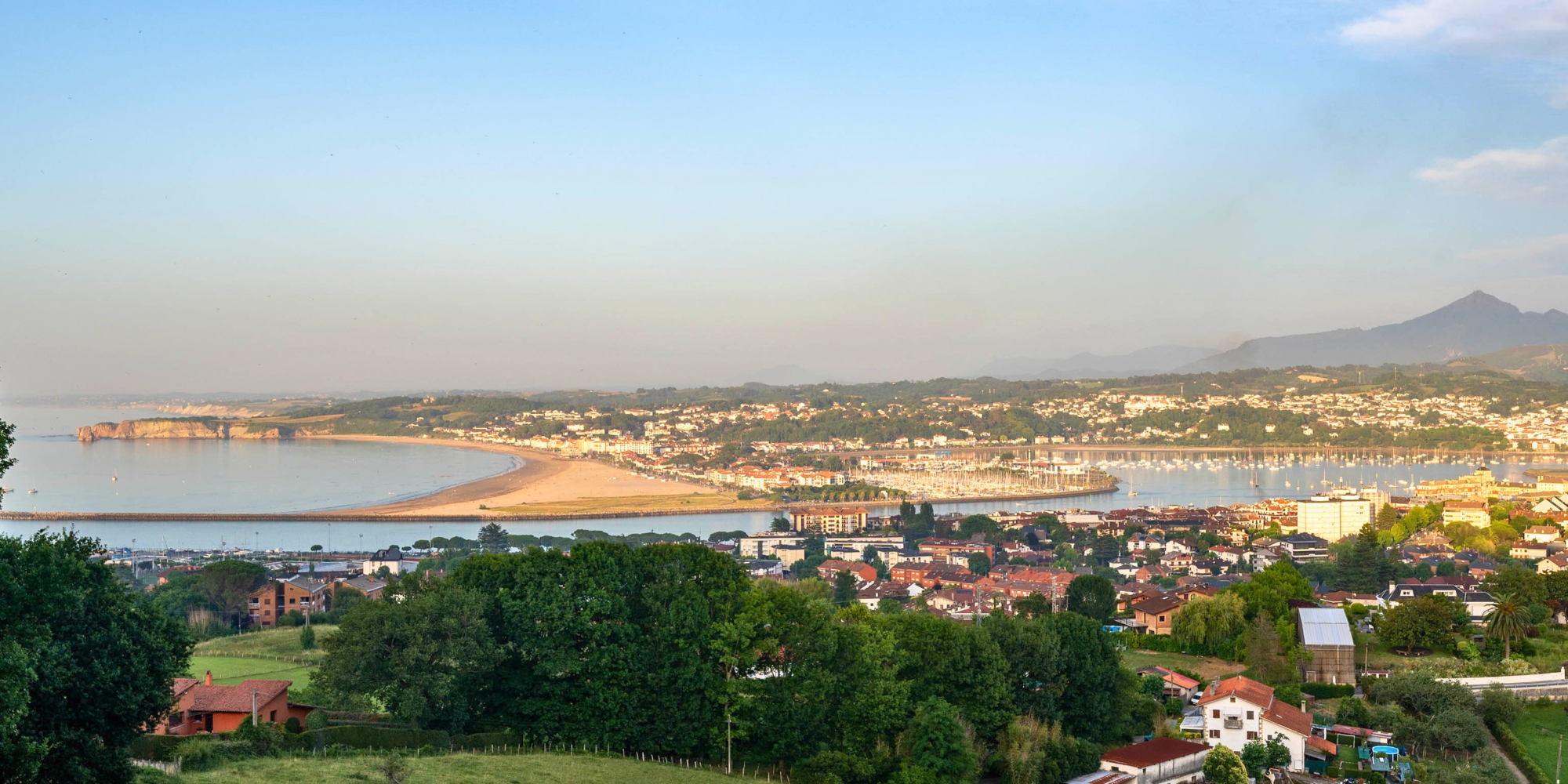
The high-end real estate market along the Bidasoa and the Basque Country, connecting the elegance of Biarritz and Saint-Jean-de-Luz with the sophistication of San Sebastián, Hondarribia, and Zarautz, forms a truly unique territory in Europe. For many international investors and buyers, crossing the muga (border) is not just a change in landscape or lifestyle, but also stepping into distinct regulatory and tax frameworks.
Understanding the tax peculiarities on both sides of the Bidasoa is essential to optimizing any luxury real estate investment. At BARNES San Sebastián, we analyze the key tax differences between Spain and France to guide you safely and precisely through your next asset acquisition.
The Moment of Purchase and Initial Transfer Taxes
The first major divergence between the two countries arises at the moment of formalizing the purchase before a notary, whether acquiring a newly built property or a resale home.
- In Spain (Gipuzkoa / Basque Country):
- For resale properties, the acquisition is subject to the Property Transfer Tax (Impuesto de Transmisiones Patrimoniales - ITP). It is worth noting that the Basque Country's foral (regional) tax regime features a competitive general rate (set at 7%) compared to common-regime regions in Spain. For newly built properties, the transaction is subject to Value Added Tax (IVA, typically fixed at 10%) plus the Tax on Documented Legal Acts (AJD).
- In France (French Basque Country / Nouvelle-Aquitaine):
- Acquisition costs (commonly known as frais de notaire, which encompass registration taxes and departmental fees) are notably higher, generally ranging between 7% and 8% for older residential properties, and decreasing considerably for new real estate developments (around 2% to 3%).
Current Taxation and Property Maintenance
Once the residence is acquired, the recurring annual tax burden differs appreciably depending on each state's legislation.
- Local Rates and Municipal Tax Comparison:
- In Spain, owners must pay the IBI (Real Estate Tax) annually, which is a moderate municipal tribute. Additionally, if the buyer is not a tax resident in Spain and uses the property for personal use or leaves it vacant, the Spanish Tax Agency levies a fictitious income tax (imputed income) on the property's cadastral value.
- In France, the owner must pay both the Taxe Foncière and the traditional Taxe d’Habitation (the latter remaining fully applicable to secondary residences). Overall, recurring real estate taxpressure in French territory tends to record some of the highest rates in the European Union.
Rental Market Performance and Optimization
Northern Spain and the French-Basque coastline are prime hotspots for high-end vacation rentals and long-term asset investment.
- If You Rent Out Your Property as a Non-Resident:
- Under the Spanish framework, EU citizens who earn rental income declare exclusively the net income derived from the exploitation at a fixed rate of 19%, being able to proportionally deduct expenses associated with themaintenance of the asset.
- Under the French framework, rental income is subject to French income tax (impôt sur le revenu), strictly accompanied by social security contributions (prélèvements sociaux), significantly raising the effective tax burden on gross yields compared to theSpanish side.
Asset Transfer and Capital Gains
When divesting or planning the generational handover of the property (inheritances and donations), the double taxation treaties signed between both countries require pinpoint precision. While Spain taxes capital gains of non-community residents at a uniform rate of 19%, the French system applies progressive real estate capital gains formulas that vary according to the years of effective asset ownership, gradually incorporating length-of-ownership tax reliefs.
A Borderless Lifestyle Backed by Experts
Investing on both sides of the Bidasoa, whether enjoying an exclusive apartment facing La Concha Bay or a stately property in Saint-Jean-de-Luz, demands deep knowledge of the local legal and tax environment.
At BARNES San Sebastián, we place our cross-border expertise and international network at your disposal to accompany you through every stage of your real estate project, guaranteeing a flawless transition and optimal asset management. Shall we talk about your nextresidence?